Evaluating the "Today's Menu: Eat It or Starve" SVG for Modern Crafting Projects
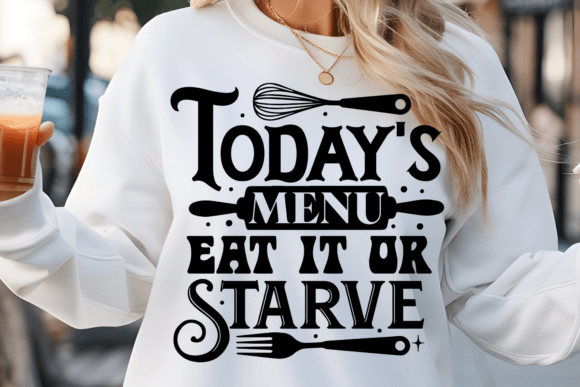
The phrase "Today's Menu: Eat It or Starve" has become a staple in household humor, often appearing on kitchen decor, aprons, and family t-shirts. For crafters and small business owners, translating this popular sentiment into a physical product requires a reliable digital foundation. The Today's Menu Eat It or Starve SVG represents a specific category of cutting files designed to bridge the gap between a witty concept and a professional finish. When evaluating whether this specific file format and design style fits your current project pipeline, it is essential to look beyond the catchy text and examine the technical specifications, versatility, and practical applications compared to other available resources.
An SVG (Scalable Vector Graphics) file is fundamentally different from standard image formats like JPEGs or PNGs because it uses mathematical paths rather than pixels. This distinction is critical when working with cutting machines such as the Cricut Explore, Cricut Maker, Silhouette Cameo, or Brother ScanNCut. A high-quality Today's Menu Eat It or Starve SVG ensures that whether you are cutting a tiny sticker for a planner or a large decal for a pantry door, the edges remain crisp and the curves smooth. Unlike raster images that pixelate when enlarged, vector files allow for infinite scalability without loss of quality, making them the industry standard for vinyl cutting and heat transfer applications.
Technical Composition and File Versatility
When sourcing a design file, the package contents often dictate its utility. A premium offering typically includes not just the SVG, but also PNG, EPS, and DXF formats. Each serves a distinct purpose in the crafting ecosystem. The SVG is ideal for most modern cutting software, including Cricut Design Space and Silhouette Studio Designer Edition. The DXF format remains crucial for users operating older versions of Silhouette Studio that do not support SVG imports natively. Meanwhile, the PNG, particularly one provided at 300 DPI with a transparent background, is indispensable for sublimation printing or direct-to-garment (DTG) processes where a cut line is not required, but high-resolution imagery is.
The inclusion of an EPS file further extends the lifespan of the design for professional graphic designers using Adobe Illustrator or CorelDraw. This multi-format approach acknowledges that crafters often switch between tools depending on the material at hand. For instance, you might use the SVG to cut heat transfer vinyl (HTV) for a t-shirt but utilize the high-resolution PNG for a digital printable menu board. A robust file package eliminates the need to convert files manually, which can sometimes introduce errors in node placement or path closure, leading to weeding difficulties later in the process.
Comparing Design Styles and Execution
Not all iterations of the "Eat It or Starve" quote are created equal. When comparing different versions of this Today's Menu Eat It or Starve SVG, the primary differentiator is often the typography and the complexity of the layout. Some designs utilize a single, bold script font that prioritizes readability from a distance, making them suitable for wall decals or large signs. Others may employ a mixed-media approach, combining handwritten scripts with structured sans-serif fonts to create visual hierarchy and interest.
A key consideration in this evaluation is the "weedability" of the design. In vinyl crafting, weeding refers to the process of removing excess material from around the cut design. Designs with excessive flourishes, extremely thin connectors, or tightly spaced letters can be frustrating to weed, especially when using glitter or holographic vinyls which are less forgiving than standard matte finishes. A well-engineered SVG will balance aesthetic appeal with structural integrity, ensuring that loops in letters like "e" or "a" are large enough to survive the weeding process without tearing. Conversely, highly intricate designs might look stunning on a screen but prove impractical for rapid production in a small business setting.
Furthermore, the arrangement of the text impacts material usage. A compact, stacked layout minimizes the amount of vinyl required per shirt or mug, reducing overhead costs for sellers. In contrast, a wide, linear layout might require larger mats or multiple passes on smaller cutting machines. Understanding these spatial tradeoffs helps in selecting the right version of the file for your specific hardware constraints.
Material Compatibility and Application Scenarios
The versatility of the Today's Menu Eat It or Starve SVG shines when applied across various substrates. While t-shirts are the most obvious application, the utility of this design extends far beyond apparel. For home décor enthusiasts, this phrase is perfectly suited for wooden signs created using a stencil method. By cutting the design out of adhesive vinyl to use as a negative stencil, crafters can paint over wood planks to achieve a rustic, farmhouse aesthetic. The sharp vectors of the SVG ensure clean paint lines, preventing bleed-under that can ruin the professional look of the sign.
In the realm of drinkware, the design translates well to mugs and tumblers. When using permanent vinyl for cups, the durability of the cut is paramount. A file with clean nodes prevents the vinyl from lifting prematurely after washing. Additionally, for those utilizing sublimation printers, the accompanying 300 DPI PNG allows for full-color transfers onto coated ceramics or polyester-blend fabrics. This dual capability—working for both subtractive methods (cutting) and additive methods (printing)—makes the file a cost-effective asset for diversifying product lines.
Another practical application is in the creation of personalized kitchen organization tools. Laminated menu boards or magnetic fridge strips featuring this humorous quote can serve both functional and decorative purposes. The scalability of the vector file means the same design can be shrunk down for a keychain or expanded for a large banner without needing to source a new file.
Decision Factors: When to Choose This Design
Deciding whether the Today's Menu Eat It or Starve SVG is the right choice for your project depends on your target audience and production goals. If you are creating items for a family reunion, a teacher appreciation gift, or a casual home update, the relatable humor of the phrase resonates well. It strikes a balance between authority and playfulness, making it appropriate for parents, caregivers, or anyone responsible for meal planning.
However, there are scenarios where this design might not be the optimal fit. For formal events or sophisticated interior design schemes requiring minimalist or elegant typography, a humorous quote about starvation may clash with the desired tone. Similarly, if your project involves very small-scale details, such as jewelry charms or intricate paper quilling, a text-heavy design might lose legibility. In such cases, a simplified icon or a different quote with fewer characters might be more effective.
It is also important to consider licensing terms. Most digital downloads intended for personal use come with restrictions regarding commercial sales. If your goal is to sell finished products on platforms like Etsy or at local craft fairs, you must verify that the specific Today's Menu Eat It or Starve SVG you acquire includes a commercial license. Some creators offer tiered pricing where a higher fee grants unlimited sales rights, while others restrict the number of physical items you can produce. Ignoring these terms can lead to intellectual property issues, so due diligence is required before integrating the file into a business model.
Limitations and Practical Considerations
While digital files offer convenience, they are not without limitations. The success of the final product relies heavily on the user's equipment calibration and material selection. Even the highest quality SVG cannot compensate for a dull blade, incorrect pressure settings, or low-quality vinyl. Users must understand that the file is a tool, not a guarantee of perfection. Troubleshooting cut issues often requires adjusting machine settings rather than blaming the design.
Additionally, trend cycles in crafting move quickly. While food-related humor has shown longevity, specific phrasing can eventually feel dated. Investing time in customizing the file—perhaps by changing the font pairings or adding graphical elements like utensils or plates—can help extend the relevance of the design. The open nature of SVG files allows for such modifications in vector editing software, giving creative control back to the user to adapt the design to current trends.
In conclusion, the Today's Menu Eat It or Starve SVG is a versatile and practical resource for a wide range of crafting projects. Its value lies not just in the humorous text, but in the technical precision of the vector paths and the flexibility of the accompanying file formats. By carefully evaluating the design complexity, material compatibility, and licensing terms, crafters can determine if this specific asset aligns with their creative vision and production capabilities. Whether used for a one-off family gift or a line of commercial products, understanding the nuances of the file ensures a smoother workflow and a higher quality final result.